
pinarello x1
| equipment | color | size | Price | transport | status | |
|---|---|---|---|---|---|---|
| X1 105 2x12 Shimano |
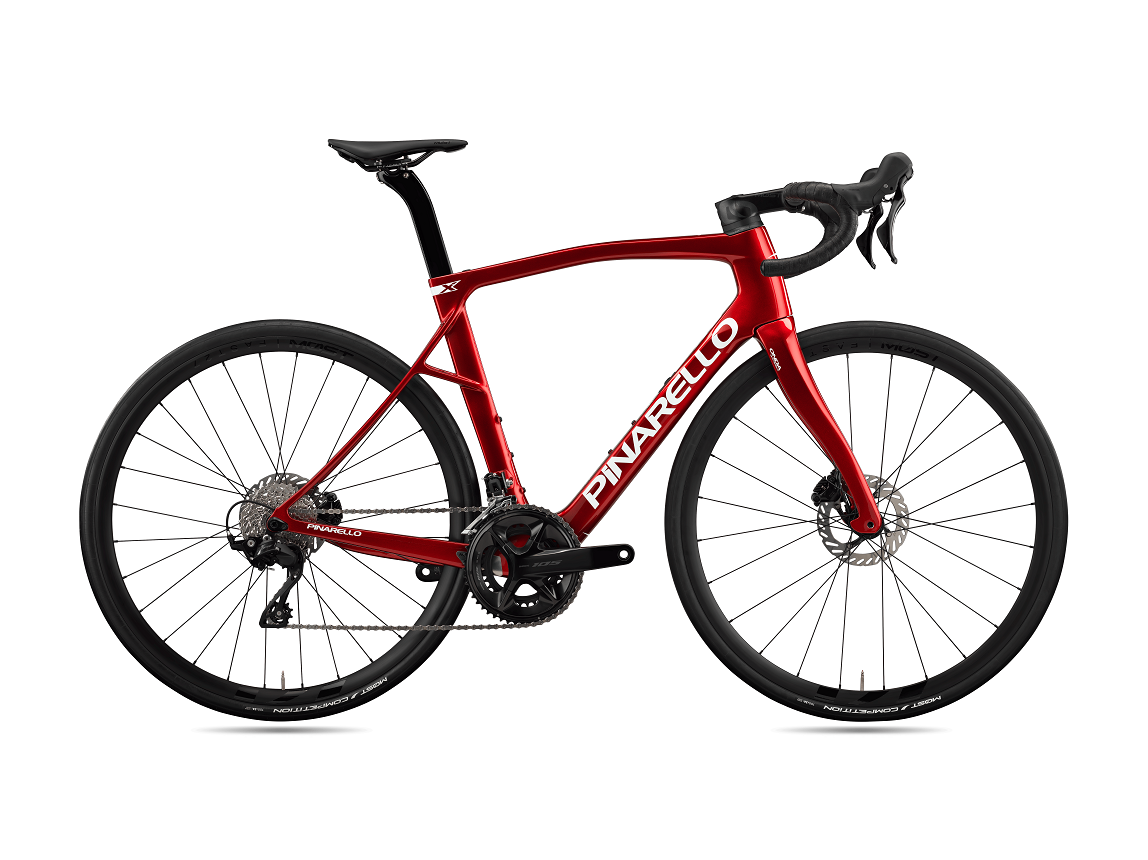
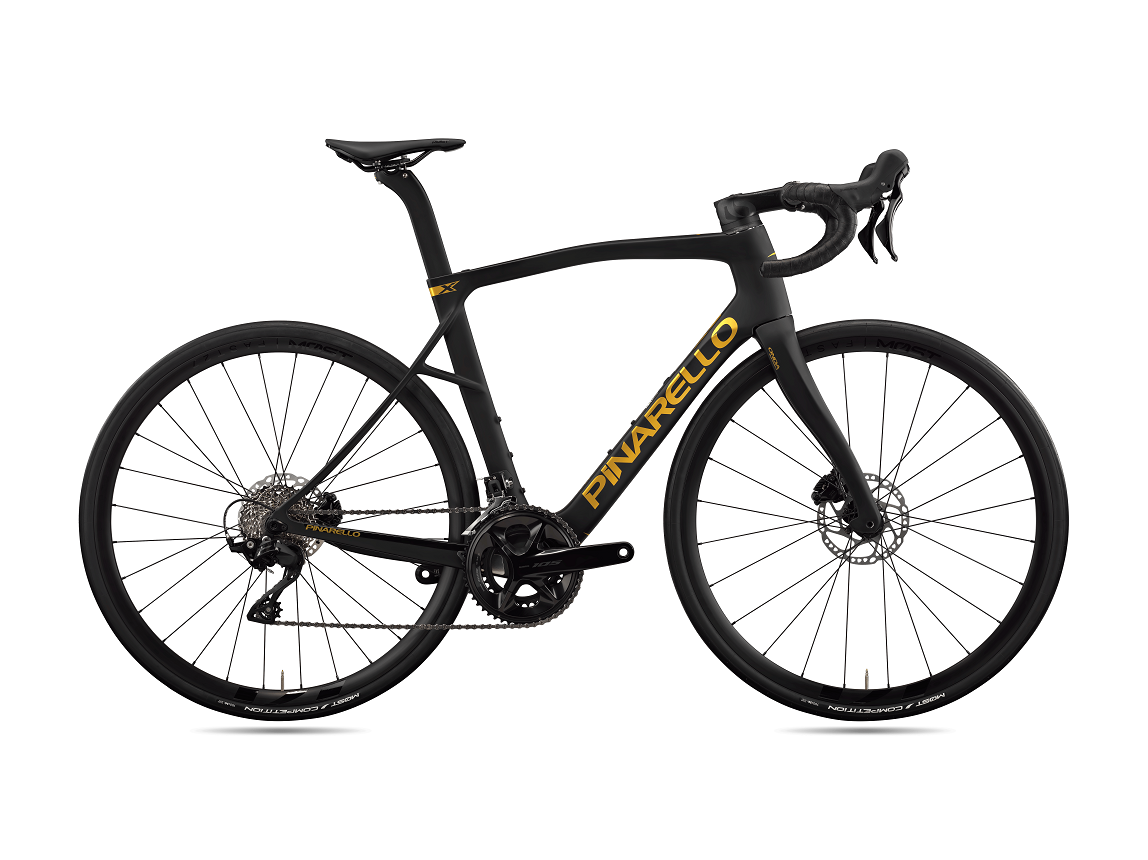
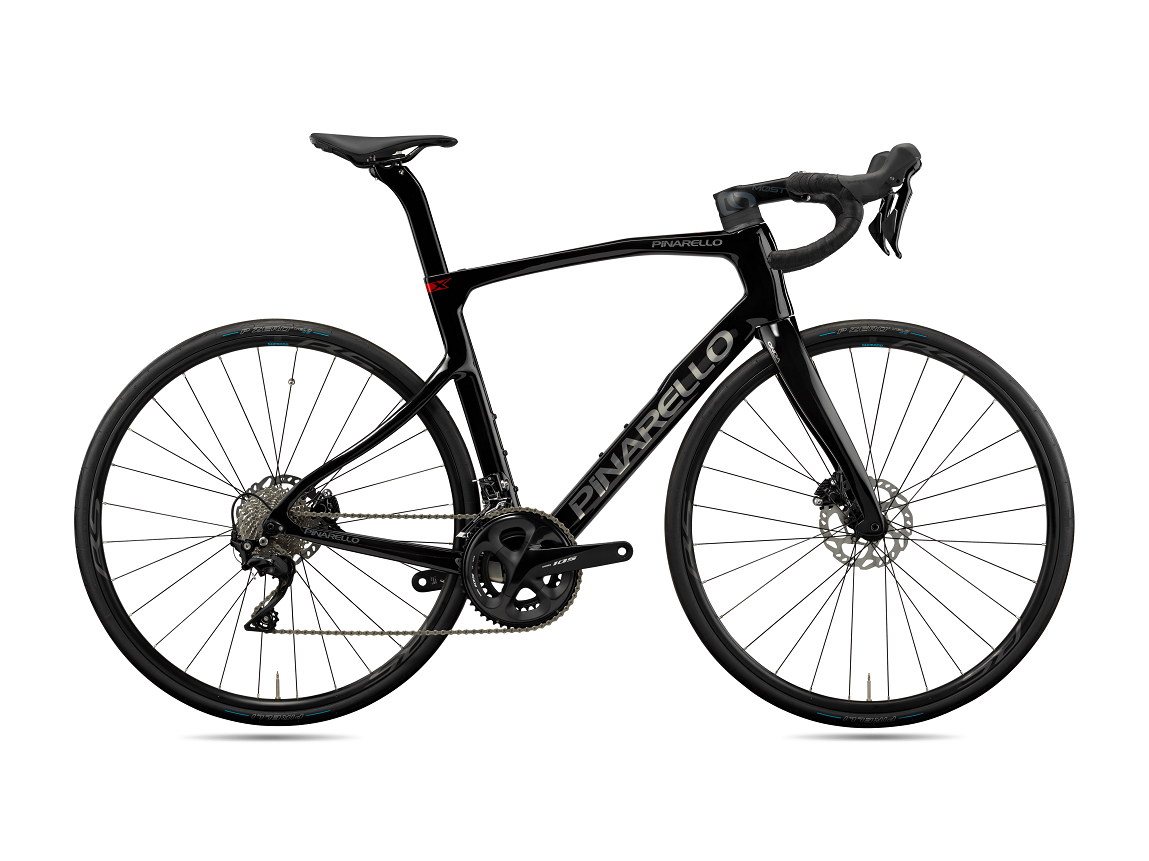
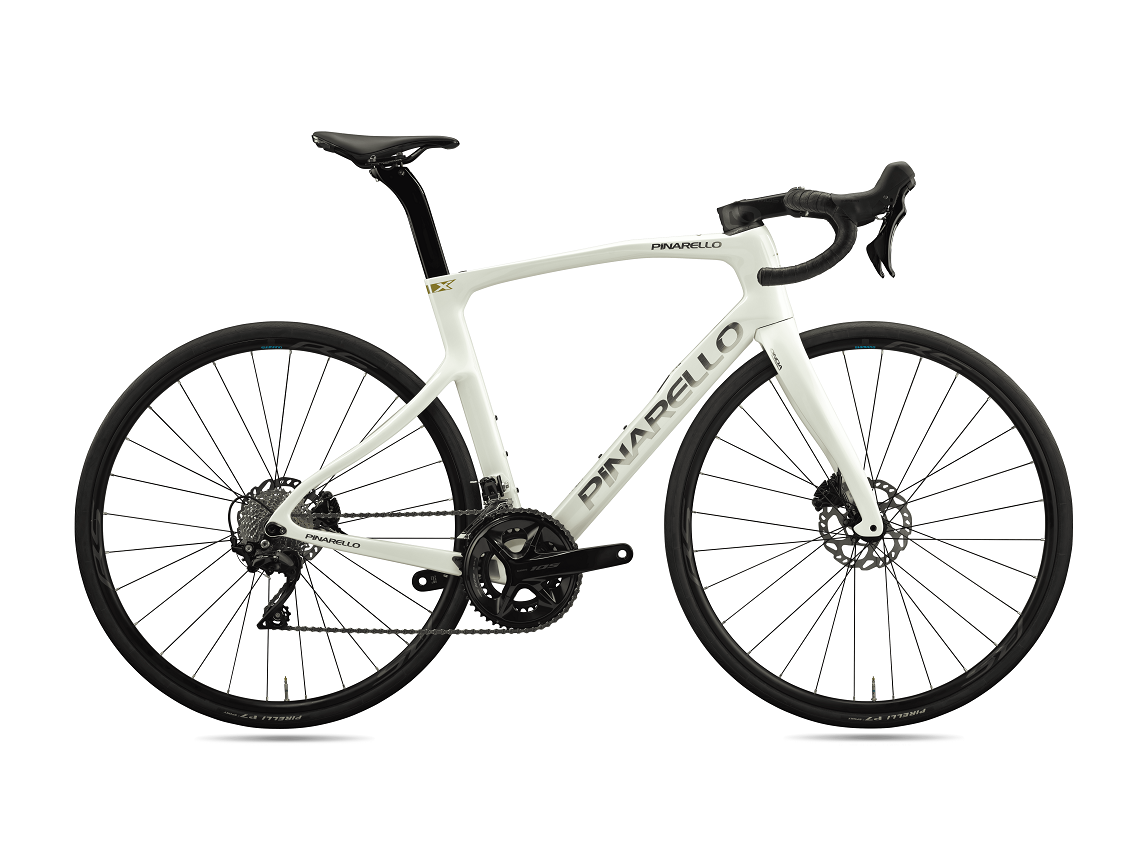 X1 105 2x12 Shimano
carbon frame endurance road bike with disc brakes | *For consumer (B2C) purchases, this product is covered by a 3-year official mandatory warranty. |
1 521 000 Ft
1 199 000 Ft
I CHECK IT
THE ITALIAN HIT
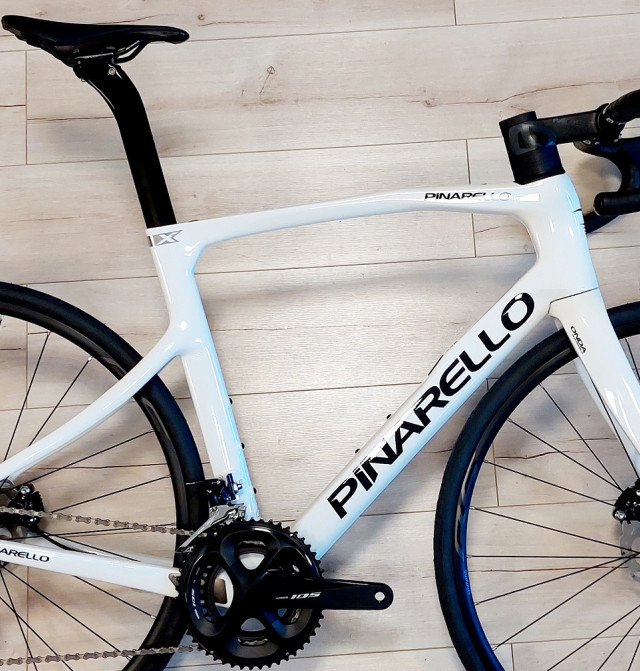
Sometimes, everything just clicks. And right now, it has. The Pinarello X1 is the quintessence of the legendary Italian luxury manufacturer’s endurance road bike line—distilled into a package with an incredibly appealing price tag. It doesn’t show off, it doesn’t boast, and it doesn’t force you to be anything other than yourself. It is just like a brilliant Italian hit song: it gets under your skin, and slowly, you become one with it.
The X1 stands apart from the rest of the Pinarello X family. It offers an even more comfortable riding position, is available exclusively with a mechanical groupset, and—best of all—its price is almost as attractive as the bike itself. Welcome to the world of supreme comfort.

Pinarello S.R.L. offers a lifetime warranty on its framesets, effective from September 15, 2026. All related information is available HERE!
Carbon fiber fabrics have become virtually dominant in premium bicycle manufacturing today. Several elite manufacturers no longer offer any other raw material for their frames—exclusively carbon. Since the frameset is responsible for roughly 70–80% of a bicycle's value and ride quality, it is crucial to understand what that "carbon" material actually is. Below, we present the background of this technology through the portfolio of Toray—the world's largest and most innovative carbon fiber manufacturer, celebrating its exact 100th anniversary in 2026.
I. The Raw Material: Why is PAN King?
Toray uses PAN-based technology. PAN is the abbreviation for Polyacrylonitrile: a synthetic, organic polymer (a specialized plastic) made from petroleum derivatives, which serves as the raw material for about 90% of the world's carbon fiber production. Carbon fiber cannot be mined directly or drawn into filaments from pure carbon; it requires a carrier material—technically known as a precursor—which is then carbonized (burned back into carbon) in an oxygen-free environment.
PAN (Toray) vs. Pitch (Mitsubishi Chemical)
- Toray's biggest domestic competitor, the also-Japanese Mitsubishi, is strong in Pitch-based carbon fibers, which are made from coal tar or the liquid residue of petroleum refining. There is a massive difference between the two processes:
- PAN-based fibers (Toray): Due to PAN's unique molecular structure, the internal cohesion (tensile strength) of the fibers is much higher. Flexible, unbreakable, yet stiff fibers can be produced from it. This is why Toray dominates the aerospace industry and competitive cycling, providing the dynamism and safety required for high speeds.
- Pitch-based fibers (Mitsubishi): It is much easier to produce pure graphite from pitch with lower energy consumption, so its stiffness (modulus) can be astronomical (900+ GPa). In return, the bonding between the fibers is weak: the material is brittle, fragile, and snaps almost immediately under lateral shear forces.
- Toray's breakthrough: In third-generation fibers (such as M40X), the structure of the PAN-based precursor is manipulated at the nanoscale during stretching and baking so that the fibers retain their unbreakable strength while adopting the brutal stiffness of Pitch fibers.

II. The Three Fundamental Classification Principles
In laboratories and factories, carbon fiber materials are defined based on three main physical properties:
1. Tensile Strength (How strong is it?)
This indicates how much pulling force a carbon fiber can withstand before breaking. Think of it like a rope: the higher this number, the heavier an object you can hang from it without it snapping.
In the case of M40X: Extremely high, approx. 5.7 GPa. This means that a single square millimeter cross-section of M40X fiber can theoretically withstand more than 550 kilograms of pure pulling force.
2. Modulus (How stiff is it?)
- Tensile modulus (Young's modulus) refers to the stiffness of the carbon fiber—that is, how resistant it is to stretching or bending.
- Low modulus (flexible): Like a plastic ruler. It can be easily bent by hand, is flexible, and does not break immediately.
- High modulus (stiff): Like a glass ruler. It does not yield to bending at all, remaining completely rigid, though beyond its critical point it snaps instantly.
- Why is high modulus important? In premium sports equipment, it is essential because when the cyclist applies force (pedals), the material does not flex unnecessarily or absorb energy, but transfers it directly into propulsion.
In the case of M40X: Very high, at 377 GPa—meaning this is an extraordinarily stiff, unyielding carbon fiber.
3. Density (How light is it?)
Carbon fibers weigh a quarter as much as steel while being much stronger and stiffer.
- Density of steel: approx. 7.8 g/cm³
- Density of aluminum: approx. 2.7 g/cm³
- Density of carbon fiber (including M40X): approx. 1.75–1.8 g/cm³
The difference in raw weight among various carbon fibers is minimal; the real weight reduction comes from the fact that the higher stiffness and strength of more expensive fabrics allow less material (thinner walls) to be built into the frame.

III. Industry Categories Based on Modulus
The industry and Toray classify fibers into four main categories based primarily on their stiffness (Modulus):
| Category Name | Stiffness (Modulus) | Characteristics | Example |
| Standard Modulus (SM) | Lower (~230 GPa) | The most widespread, durable industrial carbon fiber. | TorayCa T300 / T700 |
| Intermediate Modulus (IM) | Medium (~290 GPa) | Excellent balance between raw strength and flexibility. | TorayCa T800 / T1100G |
| High Modulus (HM) | High (~350–450 GPa) | Extremely stiff, terribly expensive, and lightweight. M40X belongs here. | TorayCa M40X |
| Ultra-High Modulus (UHM) | Extra high (>450 GPa) | Astronomically priced, very brittle fibers used in aerospace. | TorayCa M60J / M60JB |
IV. Torayca®'s In-House Classification
Toray divides its premium fibers into two traditional families, plus a new-generation hybrid series. The meaning of the letters is logical: T = Tensile Strength, M = Modulus (Stiffness).
1. The "T" Family: The Workhorses (High Strength)
Designed to withstand the greatest possible pulling force without breaking. They are more flexible and offer superior resistance to sudden, dynamic impacts. The higher the number, the stronger the fiber.
- T300 / T700: The industry standard. The base material for more affordable carbon frames and fishing rods.
- T800 / T1000: Mid- to high-end sporting goods, as well as the fuselage material for Boeing 787 Dreamliner aircraft.
- T1100G: One of the strongest carbon fibers in the world. Used where it is essential that the structure does not crush under any external impact (critical zones of top-tier racing bikes).
2. The "M" Family: The Stiff Ones (High Modulus)
Structural stability and zero flex are the primary considerations here. The two-digit number indicates stiffness in Gigapascals (e.g., an M40 fiber is approx. 400 GPa).
- M40 / M46: Very stiff fibers for premium golf club shafts and precision instruments.
- M55 / M60: Ultra-high modulus fibers for satellites and spacecraft, where materials must not deform even under extreme temperature changes.
- The "MJ" subtype (2nd generation): E.g., M40J, M50J. Using a modified crystal structure, Toray improved the inherently poor tensile strength of stiff fibers (reducing brittleness).
3. The New Era: The "X" Family (MX Series)
Due to the laws of physics, stiffness and strength were previously enemies of one another. Toray broke through this barrier with the M40X. The "X" stands for this revolutionary crossover: it retains the brutal stiffness of the M-family while gaining the astonishing tensile strength of the T-family.
Summary Table for Easier Overview:
| Family | Main Characteristic | What It Gives the Product? | Typical Applications |
| T-Series (e.g., T700, T1100G) | High strength | Resists breakage, withstands impacts and heavy loads. | Aircraft fuselages, bicycle impact zones, everyday sports equipment. |
| M/MJ-Series (e.g., M40J, M55J) | High stiffness | Does not bend, prevents frame deformation, transfers energy instantly. | Premium bicycles, golf club shafts, satellites, spacecraft. |
| X-Series (e.g., M40X) | Maximum strength + Maximum stiffness | Enables an extremely lightweight structure that is simultaneously rigid and unbreakable. | Luxury bicycle frames, high-end tennis rackets, aerospace industry. |

V. Weave Structure and Tow Size
At the factory, microscopic filaments are gathered into bundles called "tows." The letter "K" stands for kilo (thousand) and indicates how many thousand elementary filaments make up a single tow:
- 1K: 1,000 filaments per tow. Very thin, dense, and precise, but astronomically expensive. Rare, made almost exclusively from basic T300.
- 3K: 3,000 filaments per tow. The classic, most widespread checkerboard-patterned weave size.
- 12K: 12,000 filaments per tow. Wider tows with a distinctive large-square design. Allows for faster manufacturing.
In modern bicycle manufacturing, K-designations are mostly cosmetic and apply only to the outermost, visible protective layer.
What is UD (Uni-Directional)?
- UD means that the carbon fibers are not woven across each other; instead, they all run parallel in a single direction. Externally, it appears as a matte, solid black surface.
- Because carbon fiber is only strong longitudinally, UD sheets allow engineers to lay the material down at the exact millimeter and angle from which stress originates. The interior of 95% of modern elite frames is built from pure UD carbon.
Compatibility Limitations
- Super-stiff fibers (T1000, T1100G, M40X) are manufactured almost exclusively as UD materials. At a microscopic level, they behave like glass: if you tried to weave them crisscross on a loom (1K/3K), the bending would simply cause them to snap. Flashy woven textiles (1K, 3K, 12K) are made from the more flexible T300 and T700 fibers.
- Example (Pinarello Dogma F): The internal structure of the frame is built from brutally strong and stiff M40X UD tapes, while the outermost layer features an extra-dense 1K woven protective layer made of T700 fibers to guard against surface damage and provide stunning aesthetics.

VI. The Mystery of M40X: Why Pinarello?
Torayca M40X is the absolute pinnacle of cycling, yet it is rarely encountered. Currently, it is openly seen almost exclusively on Pinarello's elite models (Dogma F, Dogma X, Bolide F TT, Dogma GR). There are strict economic and political reasons for this:
- Exclusive partnership: Through decades-long strategic contracts and astronomical sums, Pinarello secures priority and exclusivity rights in the road cycling market.
- Brutal price difference: While the global B2B price of standard T700 fiber hovers around $15–$22/kg, the price of M40X can exceed $2,100 per kilogram!
- Strict government and manufacturer control: M40X is a strategic material, and its procurement requires licensing. Currently, only three bicycle manufacturers in the world hold an official quota from Toray. Furthermore, the factory strictly monitors who uses it, how much they use, and under what technological conditions. However, Pinarello is the only bicycle manufacturer that has been testing and using this carbon fiber structure in riders' bikes for many years, reaching the point where it raised the initial 85 kg weight limit to 120 kg on bicycles made from this material.
- Why don't other brands use it? If you look at the flagship models from Specialized, Trek, Giant, and other manufacturers, they do not use Toray's designations; instead, they use their own code names (e.g., Specialized FACT 12r, Trek OCLV 800, etc.).
Because Torayca M40X is astronomically expensive (and its processing also requires custom resins, 15–24 hours of hand labor, and rigorous quality control), most manufacturers prefer to blend more economical yet still capable fibers (such as a mix of T800 and M40J) so the frame price does not cross a certain psychological threshold. Currently, almost only the best and most demanding prestige manufacturers can afford to buy and integrate M40X into their multi-million-forint flagship models.
How can they still make lightweight frames from cheaper materials? The answer is simple: they use less material, and durability is not really a priority. On some mass-market manufacturers' 600-something-gram road frames, the wall thickness in certain spots is as thin as a soda can—and that is without even mentioning "fiberglassing," which is unfortunately treated as a completely accepted practice by many.
All in all: Finite Element Analysis is an old invention, yet the laws of physics can be very cruel.

VII. The Secret Ingredient: Why is Nanoalloy® Resin Mandatory?
- Even M40X fiber would not be enough for success on its own: its genius lies in controlling the baking temperature (tuning crystal structure control to 2,000–2,400 °C instead of 3,000 °C) and in the Nanoalloy® matrix resin.
- If M40X were infused with ordinary off-the-shelf epoxy resin, the frame would shatter into splinters at the very first stone chip. Standard resin is brittle like glass; upon impact, microscopic cracks form inside it and spread invisibly until the frame suddenly snaps in half.
How does Nanoalloy® work?
During Toray's chemical breakthrough, nanometer-sized elastic rubber particles are dispersed with complete uniformity into the hard epoxy resin.
[Impact strikes the frame]
│
▼
[Force reaches the super-stiff M40X fibers]
│
▼
[Fibers transfer the stress to the resin]
│
▼
[Nanoalloy® rubber particles absorb and dissipate the energy]
│
▼
[Result: The resin does not crack, the fibers stay in place, and the frame remains completely INTACT]
The microscopic particles in the resin act like millions of tiny shock absorbers inside the frame.
VIII. What Materials Does Wilier Use?
1. HUS-MOD (High Ultra Stiffness Modulus) – The Absolute Pinnacle
- This is Wilier's uncompromising, top-shelf carbon fiber blend, used exclusively on its highest-tier SLR models (Filante SLR ID2, Supersonica SLR, Urta MAX SLR, etc.).
- Technological background: HUS-MOD is Wilier's custom-engineered formula combining Toray's third-generation High Modulus and highest-grade Intermediate Modulus fibers.
- Liquid Crystal Polymer (LCP) symbiosis: On flagship road, mountain bike, gravel, and time-trial models, a liquid crystal polymer woven mesh is laminated between the HUS-MOD fibers.
- Characteristics: Brutally unyielding and reactive. Thanks to the LCP, the frame can absorb unpleasant road micro-vibrations while transferring pedaling power with zero energy loss.
2. NHU-MOD (Normal High Ultra Modulus) – The Premium Golden Middle GroundNHU-MOD is the raw material for Wilier's upper-mid-range SL (Superlight) or specialized adventure models.
- Technological background: A mixture of High Modulus and enhanced tensile strength (High Impact Strength) fibers.
- Characteristics: This category is a more affordable translation of the SLR models' technology for everyday riders.
- Load capacity and bikepacking: Because the resin-to-fiber ratio here is tuned for higher physical resilience, Wilier uses this material in its analog and electric gravel bikes designed for relentless adventures. It easily handles heavy bikepacking bags (up to 120 kg total system weight) and harsh off-road impacts.
3. NH-MOD (Normal High Modulus) – The Indestructible Workhorse
- The NH-MOD category marks the entry point into Wilier's serious, performance-oriented carbon world.
- Technological background: A blend of Standard and Intermediate Modulus fibers. Its goal is not to break weight records, but to achieve maximum torsional stiffness and bulletproof durability at a rational price point.
- Characteristics: Heavier than HUS-MOD, yet thanks to its wall thickness and material structure, it is remarkably comfortable, dampens impacts superbly, and offers a very long lifespan. Wilier also uses this fabric in its all-rounder road model, the Wilier Rapida.

Summary
Overall, Toray sells M40X fiber and Nanoalloy® resin almost exclusively together in the form of pre-impregnated (prepreg) sheets because the two components depend on one another. M40X gives the frame its unyielding, rock-hard character, while Nanoalloy® resin provides the internal protective web and compressive strength that shields this wonder fiber from potential damage.
This is why no cheaper Far Eastern contract manufacturer is able to replicate this standard—and it also explains why "premium" frames from Chinese manufacturers cost exactly what they do.
-
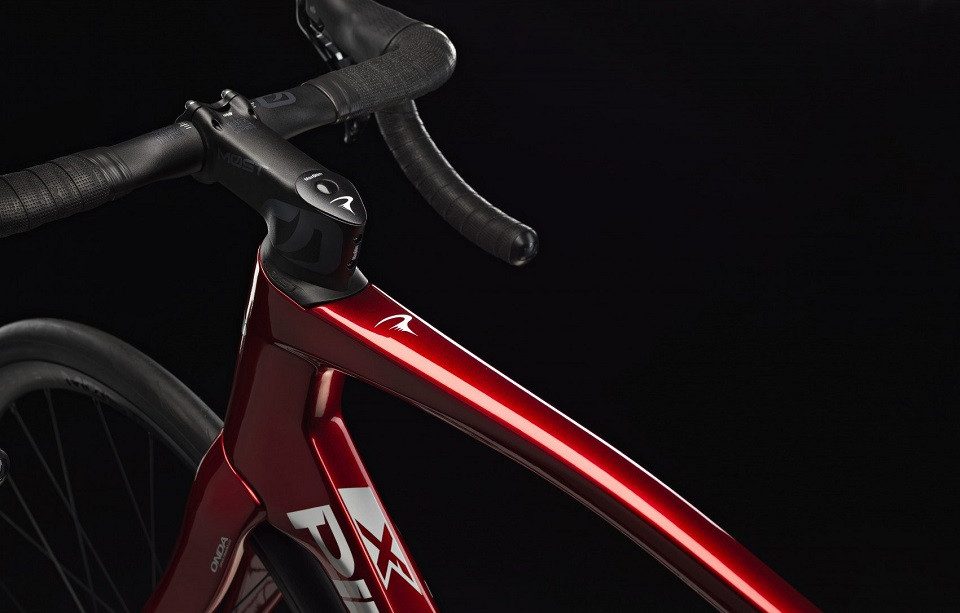
TORAYCA T600 UD HIGH MODULUS CARBON: A unidirectional carbon fiber composite optimized for comfort, designed to absorb road vibrations.
-
ASYMMETRIC FRAME DESIGN: A frame design engineered based on the flow of forces.
-
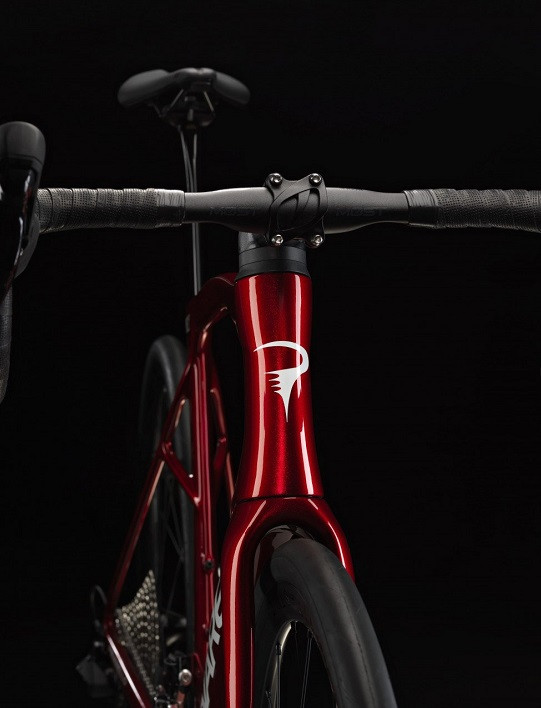
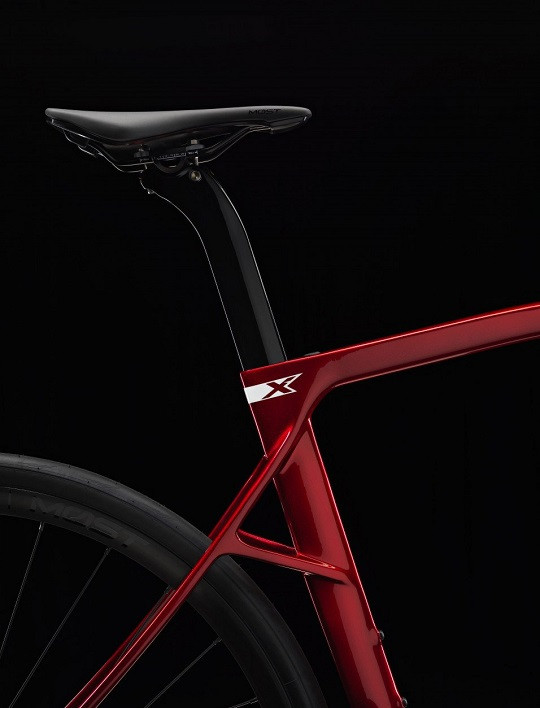
X-STAYS SYSTEM: A unique Pinarello seat stay system that connects to the seat tube at four points; its lower attachment points effectively absorb road vibrations.
-
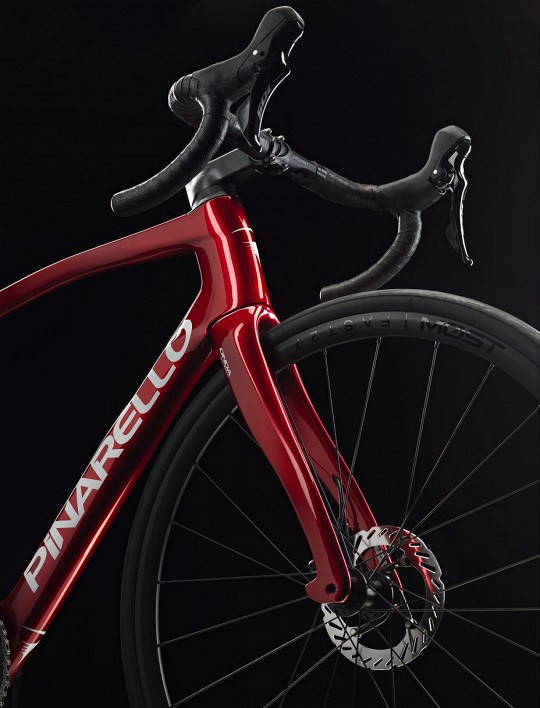
FORK FLAP: An aerodynamic fairing covering the brake caliper at the lower end of the fork.
-
TiCR TECHNOLOGY: Full cable integration.
-
ONDA FORK: An exceptionally stiff fork that nonetheless absorbs vibration; it is also an integral part of Pinarello's design identity.
-
TIRE CLEARANCE: Accommodates road tires up to 35 mm wide.


why choose pinarello?
Pinarello is the embodiment of victory and success. Its track record of success surpasses the combined achievements of its competitors: 30 Grand Tour victories have been secured on the brand—including 15 Tour de France titles. A significant number of Hour Records—including the current one—are held by Pinarello. The brand boasts 48 track cycling world titles, 14 time-trial world championships, and countless World, European, and Olympic victories across road cycling, cyclocross, XCO, and Ironman events.
Today, they are the only bicycle manufacturer in the world that develops every single component for its bikes in-house—under the "MOST" brand. They work exclusively with the Japanese company TorayCa, which produces specific fabrics and composites tailored specifically for Pinarello. Market-leading engineering, a unique corporate culture, and an all-consuming passion have created the most legendary icon in cycling.

frame technology
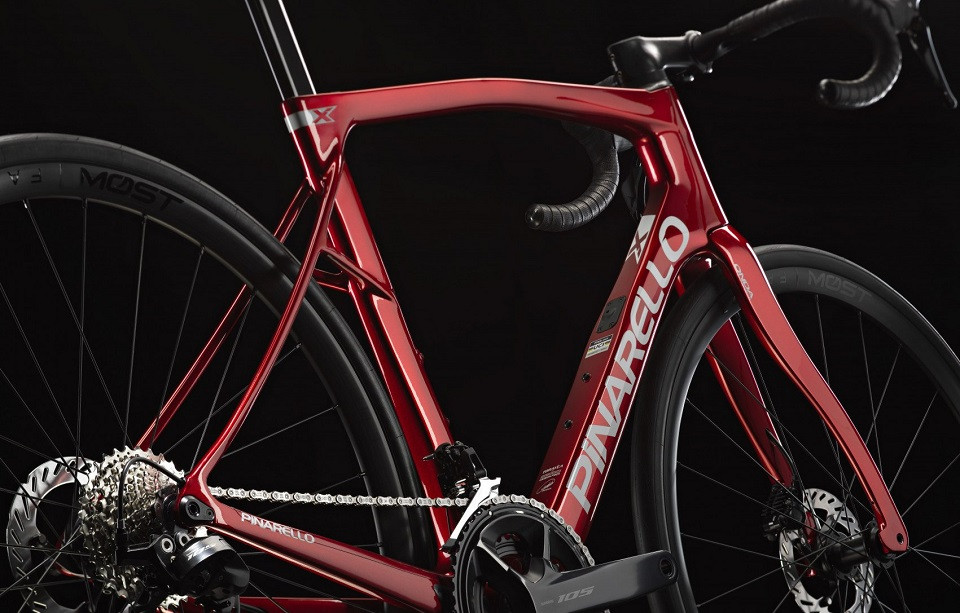
The Pinarello X1 is an exclusive carbon-framed road bike with disc brakes—engineered for endurance riding and designed for maximum comfort. It features a TorayCa T600 UD High-Modulus Carbon frameset, an asymmetric frame design, the X-Stays System, Fork Flap, an Onda fork, TiCR technology, 35mm tire clearance, and a highly durable Italian-threaded bottom bracket. The X1 serves as an entry point into the legendary world of Pinarello DNA, offering a blend of excitement, quality, and prestige at this price point.
The TorayCa T600 UD High-Modulus Carbon is a comfort-optimized composite with a unidirectional fiber layup; it absorbs road vibrations, ensuring an enjoyable and comfortable ride. It combines high durability and superior comfort with characteristics optimized for rough road surfaces. An introduction to the world of luxury.
Who do we recommend the X1 to?
WHAT IS THE MISSION OF THE PINARELLO X1? The X1 brings the essence of Pinarello within reach at an accessible price point. It represents Pinarello’s take on the endurance road category and their philosophy regarding ride comfort—further refining the concepts already realized in the X3, X5, X7, and X9 models. The mission of the X1 is to make comfort and the joy of road cycling accessible to a wider audience—all while maintaining an exceptionally high standard of quality.
WHO IS THE X1 FOR? It is the ideal choice for those seeking comfort and long-term value—at a rational, easily justifiable price point. If you are looking for a reliable companion to share in the experiences that road cycling offers, the X1 is undoubtedly the bike for you.

follow us!
Follow us for special offers, exclusive products and information!