
wilier rave slr id2
| equipment | color | size | Price | transport | status | |
|---|---|---|---|---|---|---|
| Rave SLR ID2 GRX Di2 1x12 Miche | ||||||
| Rave SLR ID2 Rival AXS XPLR 1x13 Miche | ||||||
| Rave SLR ID2 GRX Di2 1x12 Miche Carbon 48 | ||||||
| Rave SLR ID2 Grip Elite Team Red AXS XPLR 1x13 PM Miche Carbon 48 |
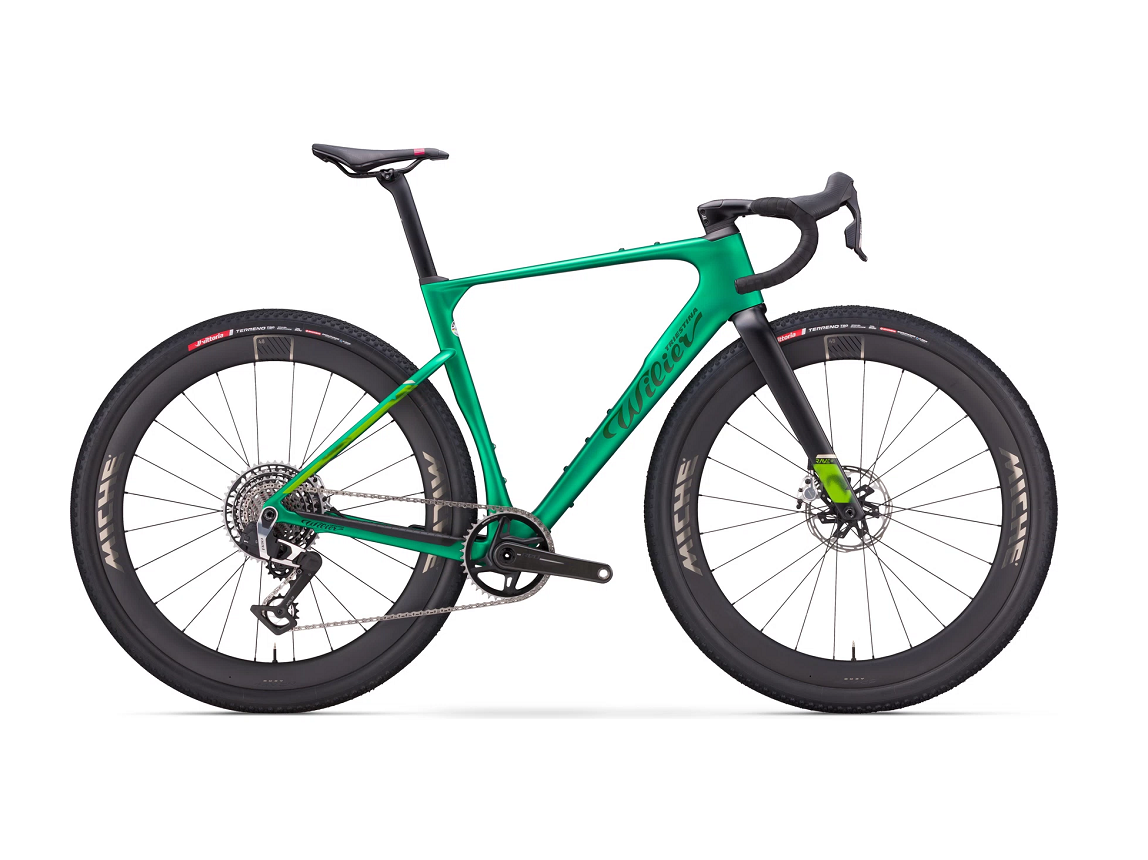
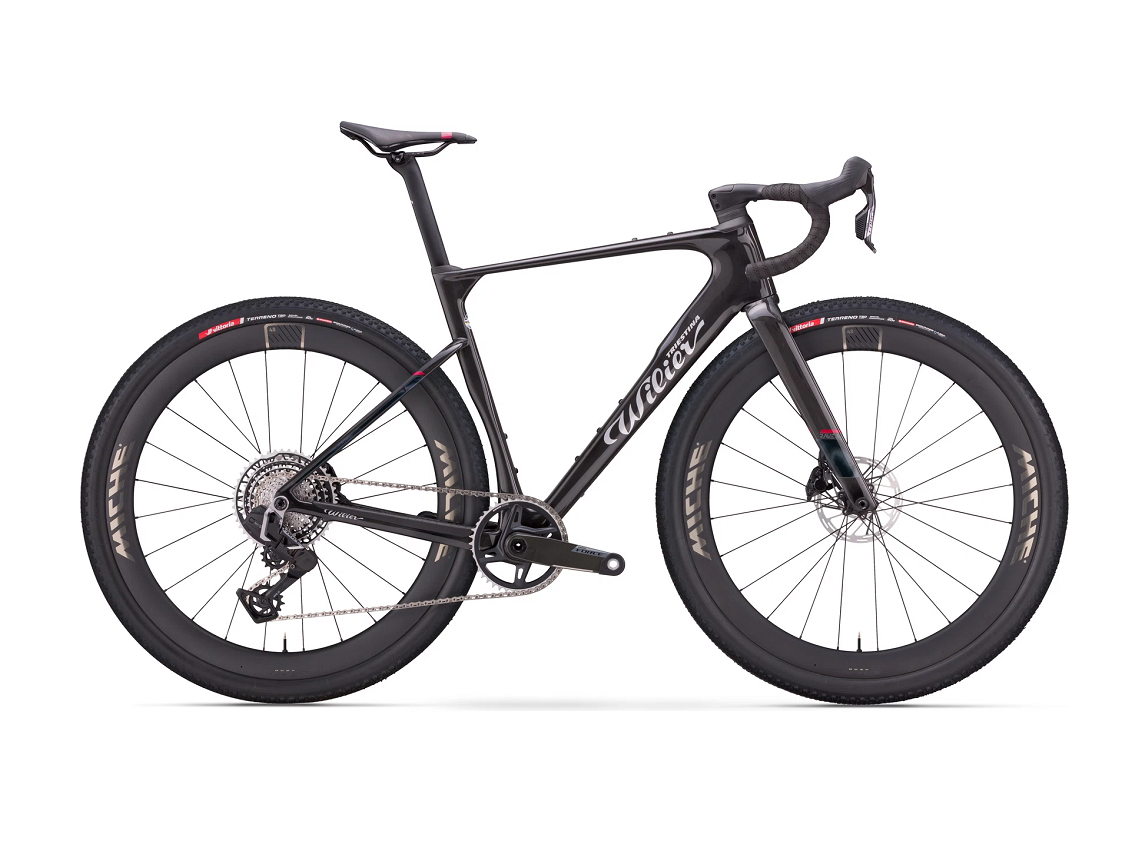
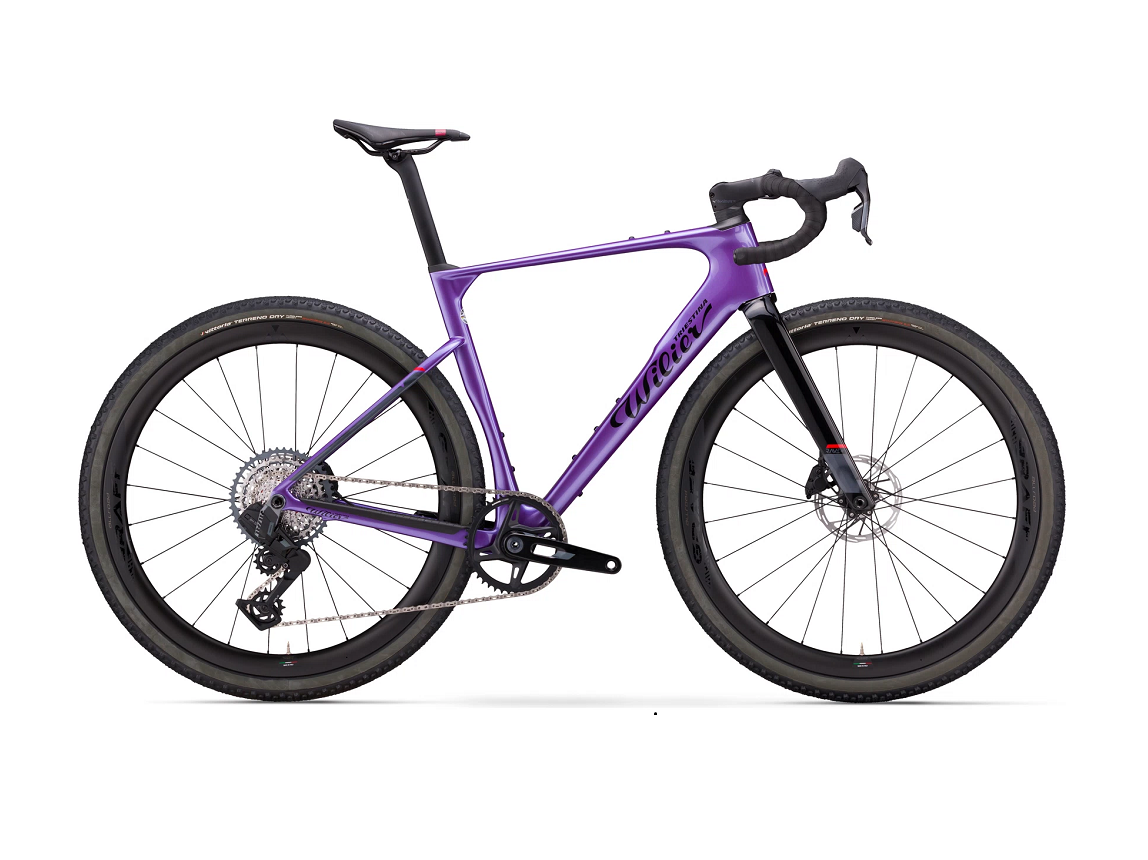
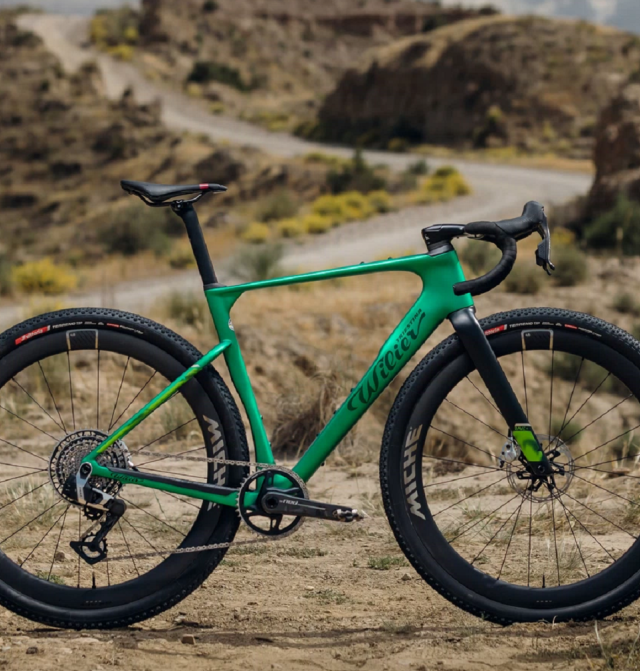
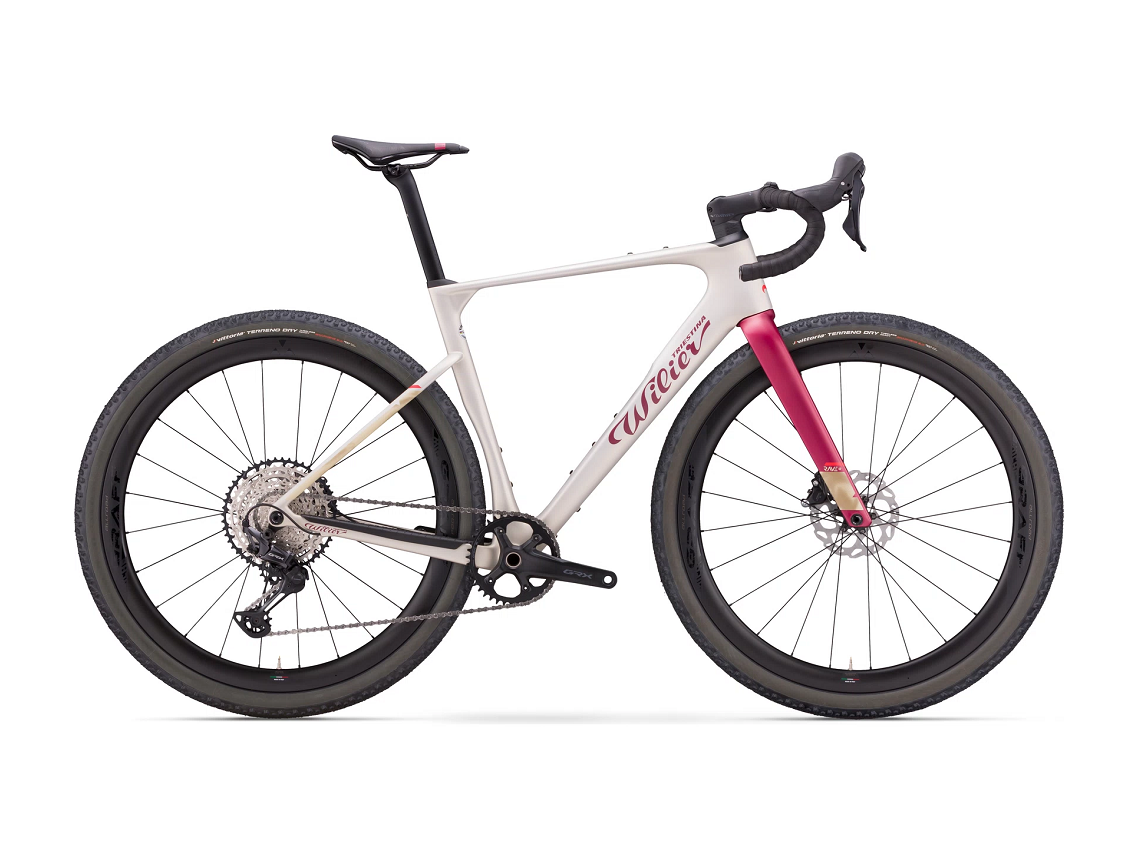 Rave SLR ID2 GRX Di2 1x12 Miche
disc brake carbon frame competition gravel bike | *For consumer (B2C) purchases, this product is covered by a 3-year official mandatory warranty. |
1 911 000 Ft
1 799 000 Ft
I CHECK IT
Rave SLR ID2 Rival AXS XPLR 1x13 Miche
disc brake carbon frame competition gravel bike | *For consumer (B2C) purchases, this product is covered by a 3-year official mandatory warranty. |
1 911 000 Ft
I CHECK IT
Rave SLR ID2 GRX Di2 1x12 Miche Carbon 48
disc brake carbon frame competition gravel bike | *For consumer (B2C) purchases, this product is covered by a 3-year official mandatory warranty. |
2 574 000 Ft
I CHECK IT
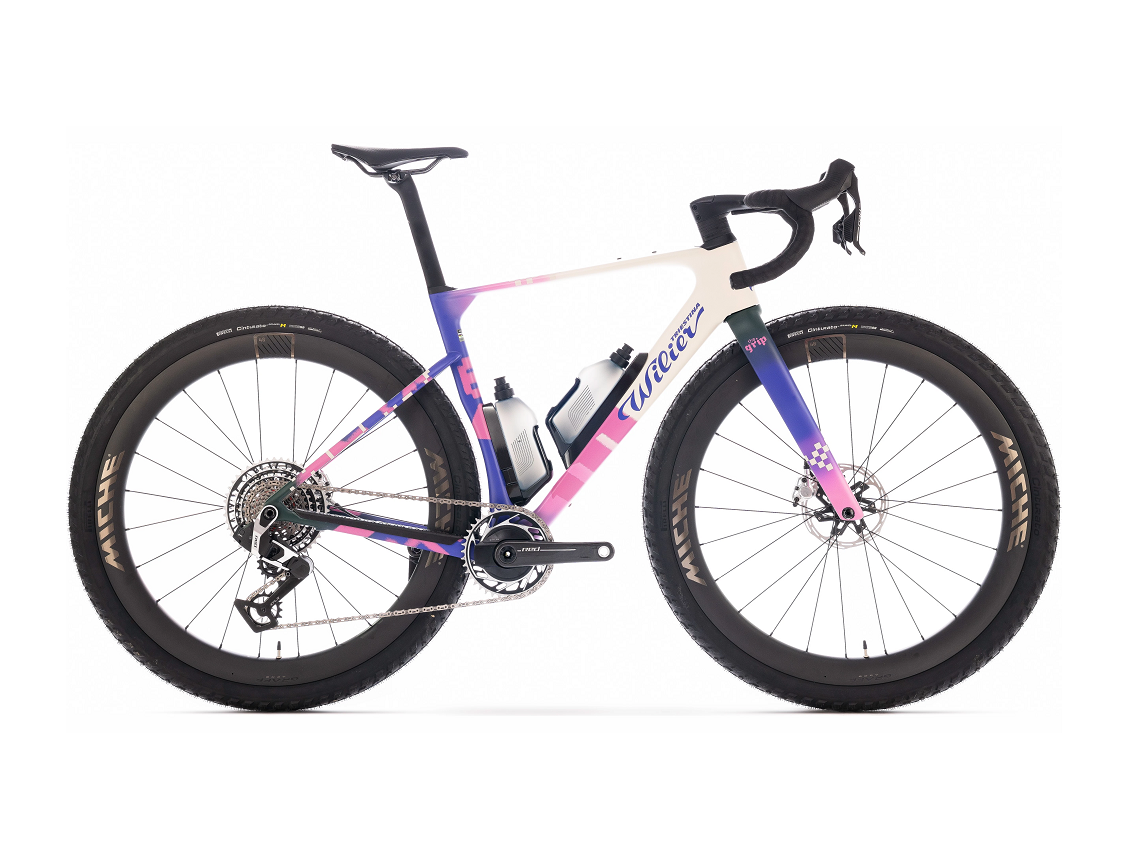 Rave SLR ID2 Grip Elite Team Red AXS XPLR 1x13 PM Miche Carbon 48
disc brake carbon frame competition gravel bike | *For consumer (B2C) purchases, this product is covered by a 3-year official mandatory warranty. |
4 290 000 Ft
I CHECK IT
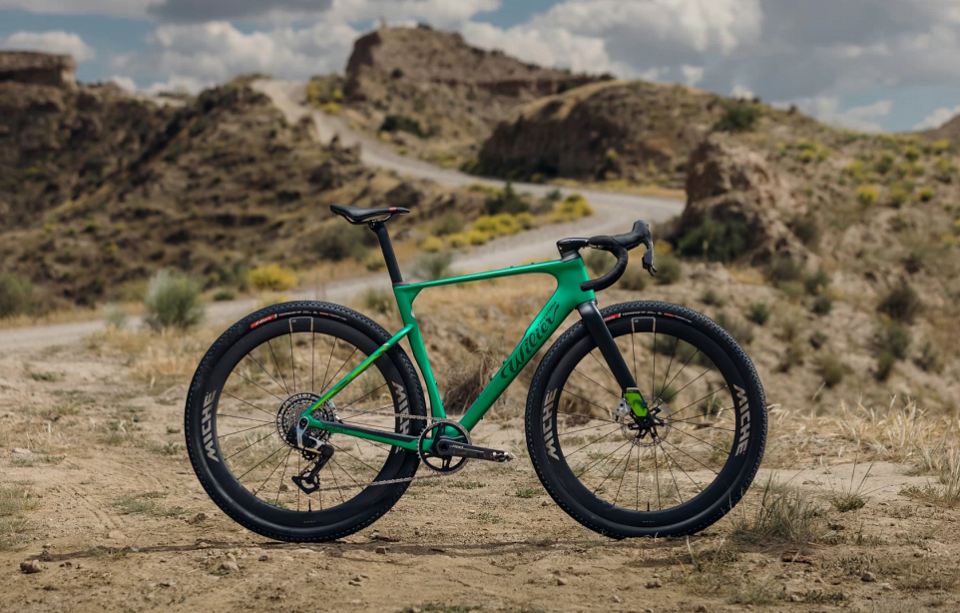
THE AERO GRAVEL PHANTOM
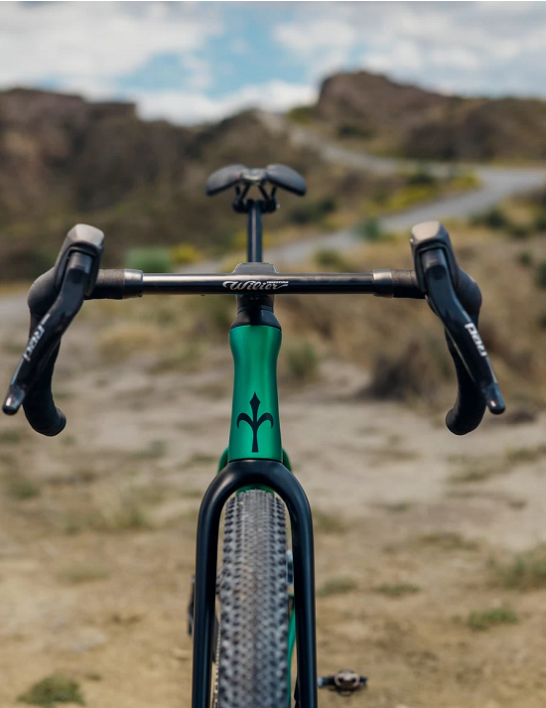
The Wilier Rave SLR ID2 is the latest high-end aerodynamic gravel bike from the patina Italian manufacturer. Yes, gravel and aero. The Rave SLR ID2 is both a full-fledged aero bike and a full-fledged gravel bike.
The Rave SLR ID2 is available in colors and designs reminiscent of the Rave parties of the 80s and 90s. A completely new concept for the most demanding customers.

Wilier Triestina S.P.A. It provides a 5-year warranty for Wilier's carbon framesets. All related information HERE is available!
Carbon fiber fabrics have become virtually dominant in premium bicycle manufacturing today. Several elite manufacturers no longer offer any other raw material for their frames—exclusively carbon. Since the frameset is responsible for roughly 70–80% of a bicycle's value and ride quality, it is crucial to understand what that "carbon" material actually is. Below, we present the background of this technology through the portfolio of Toray—the world's largest and most innovative carbon fiber manufacturer, celebrating its exact 100th anniversary in 2026.
I. The Raw Material: Why is PAN King?
Toray uses PAN-based technology. PAN is the abbreviation for Polyacrylonitrile: a synthetic, organic polymer (a specialized plastic) made from petroleum derivatives, which serves as the raw material for about 90% of the world's carbon fiber production. Carbon fiber cannot be mined directly or drawn into filaments from pure carbon; it requires a carrier material—technically known as a precursor—which is then carbonized (burned back into carbon) in an oxygen-free environment.
PAN (Toray) vs. Pitch (Mitsubishi Chemical)
- Toray's biggest domestic competitor, the also-Japanese Mitsubishi, is strong in Pitch-based carbon fibers, which are made from coal tar or the liquid residue of petroleum refining. There is a massive difference between the two processes:
- PAN-based fibers (Toray): Due to PAN's unique molecular structure, the internal cohesion (tensile strength) of the fibers is much higher. Flexible, unbreakable, yet stiff fibers can be produced from it. This is why Toray dominates the aerospace industry and competitive cycling, providing the dynamism and safety required for high speeds.
- Pitch-based fibers (Mitsubishi): It is much easier to produce pure graphite from pitch with lower energy consumption, so its stiffness (modulus) can be astronomical (900+ GPa). In return, the bonding between the fibers is weak: the material is brittle, fragile, and snaps almost immediately under lateral shear forces.
- Toray's breakthrough: In third-generation fibers (such as M40X), the structure of the PAN-based precursor is manipulated at the nanoscale during stretching and baking so that the fibers retain their unbreakable strength while adopting the brutal stiffness of Pitch fibers.

II. The Three Fundamental Classification Principles
In laboratories and factories, carbon fiber materials are defined based on three main physical properties:
1. Tensile Strength (How strong is it?)
This indicates how much pulling force a carbon fiber can withstand before breaking. Think of it like a rope: the higher this number, the heavier an object you can hang from it without it snapping.
In the case of M40X: Extremely high, approx. 5.7 GPa. This means that a single square millimeter cross-section of M40X fiber can theoretically withstand more than 550 kilograms of pure pulling force.
2. Modulus (How stiff is it?)
- Tensile modulus (Young's modulus) refers to the stiffness of the carbon fiber—that is, how resistant it is to stretching or bending.
- Low modulus (flexible): Like a plastic ruler. It can be easily bent by hand, is flexible, and does not break immediately.
- High modulus (stiff): Like a glass ruler. It does not yield to bending at all, remaining completely rigid, though beyond its critical point it snaps instantly.
- Why is high modulus important? In premium sports equipment, it is essential because when the cyclist applies force (pedals), the material does not flex unnecessarily or absorb energy, but transfers it directly into propulsion.
In the case of M40X: Very high, at 377 GPa—meaning this is an extraordinarily stiff, unyielding carbon fiber.
3. Density (How light is it?)
Carbon fibers weigh a quarter as much as steel while being much stronger and stiffer.
- Density of steel: approx. 7.8 g/cm³
- Density of aluminum: approx. 2.7 g/cm³
- Density of carbon fiber (including M40X): approx. 1.75–1.8 g/cm³
The difference in raw weight among various carbon fibers is minimal; the real weight reduction comes from the fact that the higher stiffness and strength of more expensive fabrics allow less material (thinner walls) to be built into the frame.

III. Industry Categories Based on Modulus
The industry and Toray classify fibers into four main categories based primarily on their stiffness (Modulus):
| Category Name | Stiffness (Modulus) | Characteristics | Example |
| Standard Modulus (SM) | Lower (~230 GPa) | The most widespread, durable industrial carbon fiber. | TorayCa T300 / T700 |
| Intermediate Modulus (IM) | Medium (~290 GPa) | Excellent balance between raw strength and flexibility. | TorayCa T800 / T1100G |
| High Modulus (HM) | High (~350–450 GPa) | Extremely stiff, terribly expensive, and lightweight. M40X belongs here. | TorayCa M40X |
| Ultra-High Modulus (UHM) | Extra high (>450 GPa) | Astronomically priced, very brittle fibers used in aerospace. | TorayCa M60J / M60JB |
IV. Torayca®'s In-House Classification
Toray divides its premium fibers into two traditional families, plus a new-generation hybrid series. The meaning of the letters is logical: T = Tensile Strength, M = Modulus (Stiffness).
1. The "T" Family: The Workhorses (High Strength)
Designed to withstand the greatest possible pulling force without breaking. They are more flexible and offer superior resistance to sudden, dynamic impacts. The higher the number, the stronger the fiber.
- T300 / T700: The industry standard. The base material for more affordable carbon frames and fishing rods.
- T800 / T1000: Mid- to high-end sporting goods, as well as the fuselage material for Boeing 787 Dreamliner aircraft.
- T1100G: One of the strongest carbon fibers in the world. Used where it is essential that the structure does not crush under any external impact (critical zones of top-tier racing bikes).
2. The "M" Family: The Stiff Ones (High Modulus)
Structural stability and zero flex are the primary considerations here. The two-digit number indicates stiffness in Gigapascals (e.g., an M40 fiber is approx. 400 GPa).
- M40 / M46: Very stiff fibers for premium golf club shafts and precision instruments.
- M55 / M60: Ultra-high modulus fibers for satellites and spacecraft, where materials must not deform even under extreme temperature changes.
- The "MJ" subtype (2nd generation): E.g., M40J, M50J. Using a modified crystal structure, Toray improved the inherently poor tensile strength of stiff fibers (reducing brittleness).
3. The New Era: The "X" Family (MX Series)
Due to the laws of physics, stiffness and strength were previously enemies of one another. Toray broke through this barrier with the M40X. The "X" stands for this revolutionary crossover: it retains the brutal stiffness of the M-family while gaining the astonishing tensile strength of the T-family.
Summary Table for Easier Overview:
| Family | Main Characteristic | What It Gives the Product? | Typical Applications |
| T-Series (e.g., T700, T1100G) | High strength | Resists breakage, withstands impacts and heavy loads. | Aircraft fuselages, bicycle impact zones, everyday sports equipment. |
| M/MJ-Series (e.g., M40J, M55J) | High stiffness | Does not bend, prevents frame deformation, transfers energy instantly. | Premium bicycles, golf club shafts, satellites, spacecraft. |
| X-Series (e.g., M40X) | Maximum strength + Maximum stiffness | Enables an extremely lightweight structure that is simultaneously rigid and unbreakable. | Luxury bicycle frames, high-end tennis rackets, aerospace industry. |

V. Weave Structure and Tow Size
At the factory, microscopic filaments are gathered into bundles called "tows." The letter "K" stands for kilo (thousand) and indicates how many thousand elementary filaments make up a single tow:
- 1K: 1,000 filaments per tow. Very thin, dense, and precise, but astronomically expensive. Rare, made almost exclusively from basic T300.
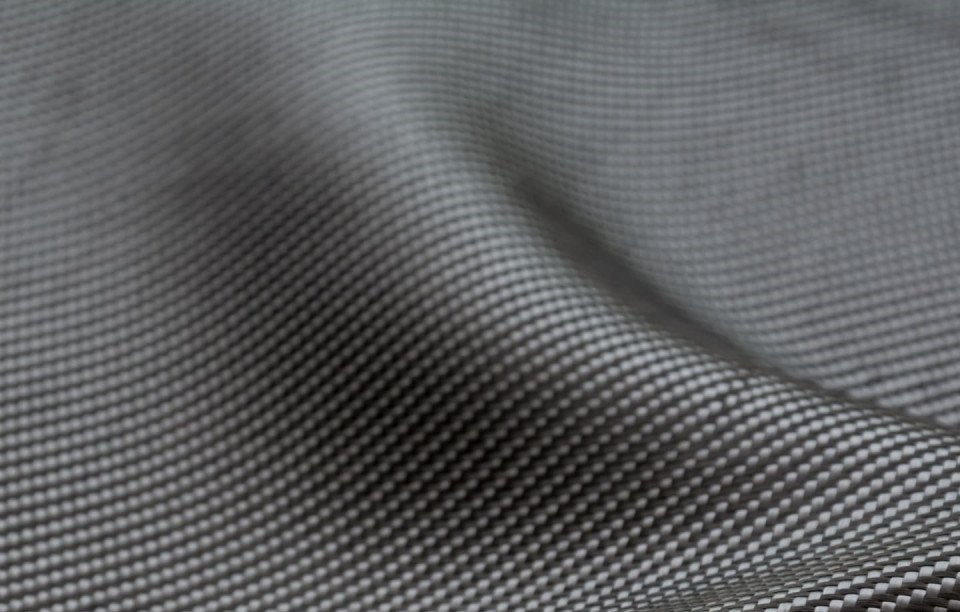
- 3K: 3,000 filaments per tow. The classic, most widespread checkerboard-patterned weave size.
- 12K: 12,000 filaments per tow. Wider tows with a distinctive large-square design. Allows for faster manufacturing.
In modern bicycle manufacturing, K-designations are mostly cosmetic and apply only to the outermost, visible protective layer.
What is UD (Uni-Directional)?
- UD means that the carbon fibers are not woven across each other; instead, they all run parallel in a single direction. Externally, it appears as a matte, solid black surface.
- Because carbon fiber is only strong longitudinally, UD sheets allow engineers to lay the material down at the exact millimeter and angle from which stress originates. The interior of 95% of modern elite frames is built from pure UD carbon.
Compatibility Limitations
- Super-stiff fibers (T1000, T1100G, M40X) are manufactured almost exclusively as UD materials. At a microscopic level, they behave like glass: if you tried to weave them crisscross on a loom (1K/3K), the bending would simply cause them to snap. Flashy woven textiles (1K, 3K, 12K) are made from the more flexible T300 and T700 fibers.
- Example (Pinarello Dogma F): The internal structure of the frame is built from brutally strong and stiff M40X UD tapes, while the outermost layer features an extra-dense 1K woven protective layer made of T700 fibers to guard against surface damage and provide stunning aesthetics.

VI. The Mystery of M40X: Why Pinarello?
Torayca M40X is the absolute pinnacle of cycling, yet it is rarely encountered. Currently, it is openly seen almost exclusively on Pinarello's elite models (Dogma F, Dogma X, Bolide F TT, Dogma GR). There are strict economic and political reasons for this:
- Exclusive partnership: Through decades-long strategic contracts and astronomical sums, Pinarello secures priority and exclusivity rights in the road cycling market.
- Brutal price difference: While the global B2B price of standard T700 fiber hovers around $15–$22/kg, the price of M40X can exceed $2,100 per kilogram!
- Strict government and manufacturer control: M40X is a strategic material, and its procurement requires licensing. Currently, only three bicycle manufacturers in the world hold an official quota from Toray. Furthermore, the factory strictly monitors who uses it, how much they use, and under what technological conditions. However, Pinarello is the only bicycle manufacturer that has been testing and using this carbon fiber structure in riders' bikes for many years, reaching the point where it raised the initial 85 kg weight limit to 120 kg on bicycles made from this material.
- Why don't other brands use it? If you look at the flagship models from Specialized, Trek, Giant, and other manufacturers, they do not use Toray's designations; instead, they use their own code names (e.g., Specialized FACT 12r, Trek OCLV 800, etc.).
Because Torayca M40X is astronomically expensive (and its processing also requires custom resins, 15–24 hours of hand labor, and rigorous quality control), most manufacturers prefer to blend more economical yet still capable fibers (such as a mix of T800 and M40J) so the frame price does not cross a certain psychological threshold. Currently, almost only the best and most demanding prestige manufacturers can afford to buy and integrate M40X into their multi-million-forint flagship models.
How can they still make lightweight frames from cheaper materials? The answer is simple: they use less material, and durability is not really a priority. On some mass-market manufacturers' 600-something-gram road frames, the wall thickness in certain spots is as thin as a soda can—and that is without even mentioning "fiberglassing," which is unfortunately treated as a completely accepted practice by many.
All in all: Finite Element Analysis is an old invention, yet the laws of physics can be very cruel.

VII. The Secret Ingredient: Why is Nanoalloy® Resin Mandatory?
- Even M40X fiber would not be enough for success on its own: its genius lies in controlling the baking temperature (tuning crystal structure control to 2,000–2,400 °C instead of 3,000 °C) and in the Nanoalloy® matrix resin.
- If M40X were infused with ordinary off-the-shelf epoxy resin, the frame would shatter into splinters at the very first stone chip. Standard resin is brittle like glass; upon impact, microscopic cracks form inside it and spread invisibly until the frame suddenly snaps in half.
How does Nanoalloy® work?
During Toray's chemical breakthrough, nanometer-sized elastic rubber particles are dispersed with complete uniformity into the hard epoxy resin.
[Impact strikes the frame]
│
▼
[Force reaches the super-stiff M40X fibers]
│
▼
[Fibers transfer the stress to the resin]
│
▼
[Nanoalloy® rubber particles absorb and dissipate the energy]
│
▼
[Result: The resin does not crack, the fibers stay in place, and the frame remains completely INTACT]
The microscopic particles in the resin act like millions of tiny shock absorbers inside the frame.
VIII. What Materials Does Wilier Use?
1. HUS-MOD (High Ultra Stiffness Modulus) – The Absolute Pinnacle
- This is Wilier's uncompromising, top-shelf carbon fiber blend, used exclusively on its highest-tier SLR models (Filante SLR ID2, Supersonica SLR, Urta MAX SLR, etc.).
- Technological background: HUS-MOD is Wilier's custom-engineered formula combining Toray's third-generation High Modulus and highest-grade Intermediate Modulus fibers.
- Liquid Crystal Polymer (LCP) symbiosis: On flagship road, mountain bike, gravel, and time-trial models, a liquid crystal polymer woven mesh is laminated between the HUS-MOD fibers.
- Characteristics: Brutally unyielding and reactive. Thanks to the LCP, the frame can absorb unpleasant road micro-vibrations while transferring pedaling power with zero energy loss.
2. NHU-MOD (Normal High Ultra Modulus) – The Premium Golden Middle GroundNHU-MOD is the raw material for Wilier's upper-mid-range SL (Superlight) or specialized adventure models.
- Technological background: A mixture of High Modulus and enhanced tensile strength (High Impact Strength) fibers.
- Characteristics: This category is a more affordable translation of the SLR models' technology for everyday riders.
- Load capacity and bikepacking: Because the resin-to-fiber ratio here is tuned for higher physical resilience, Wilier uses this material in its analog and electric gravel bikes designed for relentless adventures. It easily handles heavy bikepacking bags (up to 120 kg total system weight) and harsh off-road impacts.
3. NH-MOD (Normal High Modulus) – The Indestructible Workhorse
- The NH-MOD category marks the entry point into Wilier's serious, performance-oriented carbon world.
- Technological background: A blend of Standard and Intermediate Modulus fibers. Its goal is not to break weight records, but to achieve maximum torsional stiffness and bulletproof durability at a rational price point.
- Characteristics: Heavier than HUS-MOD, yet thanks to its wall thickness and material structure, it is remarkably comfortable, dampens impacts superbly, and offers a very long lifespan. Wilier also uses this fabric in its all-rounder road model, the Wilier Rapida.

Summary
Overall, Toray sells M40X fiber and Nanoalloy® resin almost exclusively together in the form of pre-impregnated (prepreg) sheets because the two components depend on one another. M40X gives the frame its unyielding, rock-hard character, while Nanoalloy® resin provides the internal protective web and compressive strength that shields this wonder fiber from potential damage.
This is why no cheaper Far Eastern contract manufacturer is able to replicate this standard—and it also explains why "premium" frames from Chinese manufacturers cost exactly what they do.
-
HUS-MOD CARBON: one of the best and most expensive carbon fabrics in the world.
-
PRESS FIT BOTTOM BRACKET: a threadless, super-stiff bottom bracket.
-
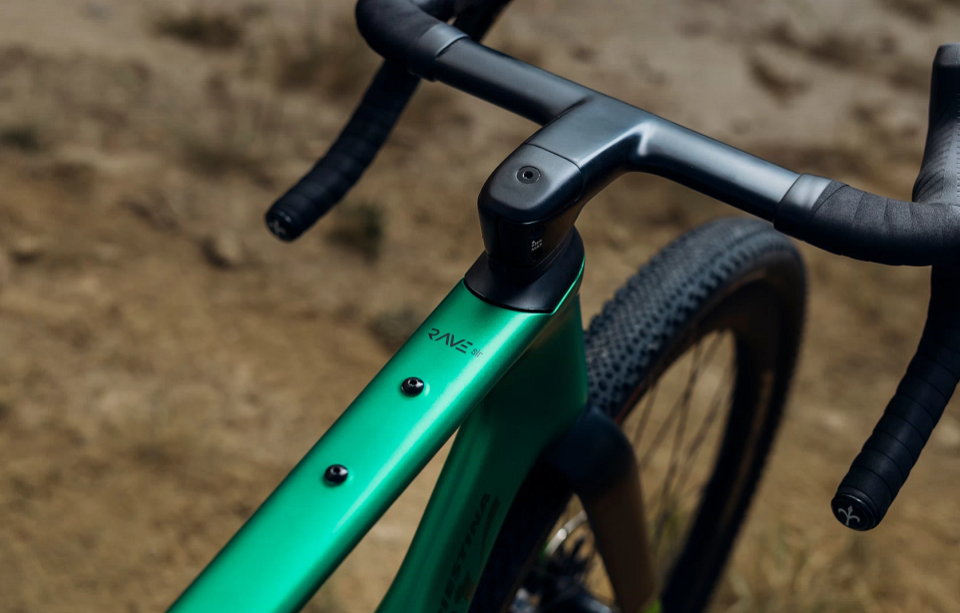
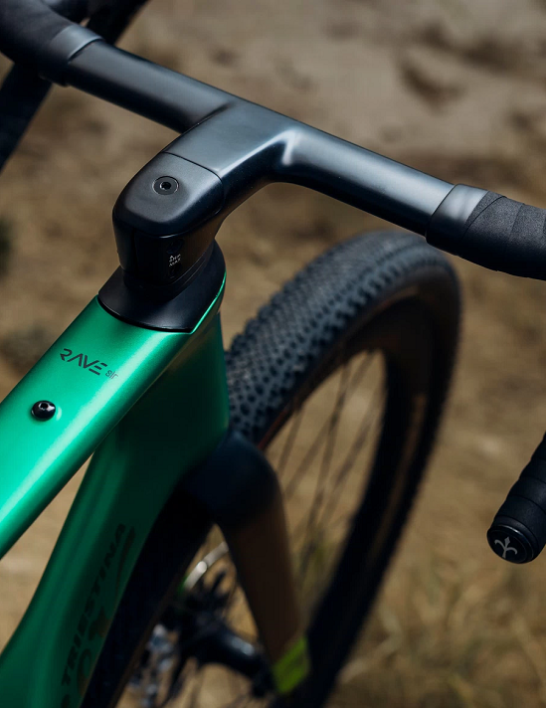
TOTAL CABLE INTEGRATION: complete integration of cables within the frame.
-
EASY FIT SPACERS: the smartest spacer system on the market.
-
RITCHEY 1-BOLT SEATPOST CLAMP: a specialized seatpost clamping system.
-
UDH DROPOUTS: a new derailleur hanger system.
-
TIRE CLEARANCE: gravel (52 mm)

why choose wilier?
Wilier Triestina is one of the world's oldest bicycle manufacturers. From Fiorenzo Magni to the current stars of Team Groupama-FDJ, generations of cyclists have ridden the legendary Italian brand's bikes with great satisfaction. Giro d'Italia victories, World and European Championship titles, and numerous other triumphs adorn the prestigious Italian manufacturer's list of successes.
Wilier’s versatility is demonstrated by the fact that it meets the highest quality standards not only in road cycling but also offers world-class mountain bike, gravel, and e-bike ranges. Wilier is one of the most innovative bicycle manufacturers, with many global companies adopting its developments year after year. Last but not least, Wilier ranks among the best in terms of value for money—and it also boasts one of the most passionate fanbases.
frame technology
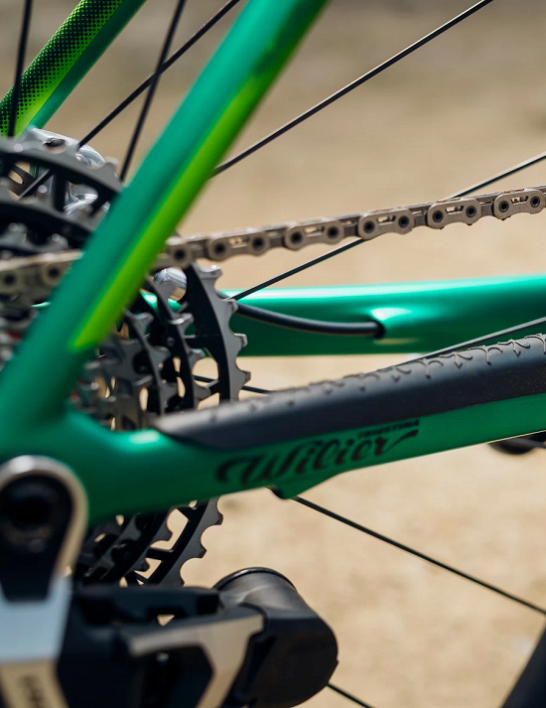
The Wilier Rave SLR ID2 is a light, disc brake, HUS-MOD + Liquid Crystal ultra high modulus carbon frame ready to race aerodynamic gravel bike. The Rave SLR ID2 frame weighs just 990 grams on the scales in size M, making it one of the very light gravel-based frames in the peloton.
In terms of characteristics, everything is as it seems. BB386 bottom bracket, Balanced Racing Geometry, total cable integration, Easy-fit spacers, Ritchey 1-Bolt Seatpost Clamp, 52mm tire clearance. The Rave SLR ID2 allows for many different settings with Accu-fit. The Rave SLR ID2 frame is one of the most versatile choices.
Who do we recommend the rave slr id2 for?
WHAT IS THE MISSION OF THE WILIER RAVE SLR ID2? The mission of the Wilier Rave SLR ID2 is to combine aerodynamics with off-road capability, ensuring that this fusion translates into the most efficient performance possible on the ground. In the case of the Rave SLR ID2, every single development focus has been subordinated to these specific objectives.
WHO IS THE RAVE SLR ID2 FOR? The Wilier Rave SLR ID2 is designed for two types of riders. The first is someone who wants to purchase a single bike capable of excelling across a wide range of uses—a machine equally well-suited for competitive racing and everyday cycling. The second type is the versatility enthusiast: someone who doesn't just want a single bike, but demands that this one bike be of an exceptionally high standard. For them, the Rave SLR ID2 is the perfect choice.

follow us!
Follow us for special offers, exclusive products and information!